The 3 Best Barista Schools in the US: Who They’re For and What You’ll Actually Learn
This post may contain affiliate links. See our disclosure policy for details.
Most people who want to get serious about coffee ask one of two questions: “What grinder should I buy?” or “What machine should I buy?” Almost nobody asks the better question: “Should I actually train with someone who already knows this stuff?”
Professional barista training compresses years of trial and error into weeks. You learn extraction theory, equipment mechanics, milk texture, workflow, tasting methodology, and sensory calibration — all in a structured environment where someone corrects your technique in real time. For home brewers who want to genuinely understand coffee rather than just follow recipes, and for anyone considering a career in coffee or opening a café, barista school is the most efficient path.
Here are the three best barista schools in the United States, what they actually teach, what it costs, and who each one is right for.
What You Should Actually Learn at a Good Barista School
Before the school list, it’s worth knowing what separates a rigorous program from one that’s mostly about pulling a few shots and getting a certificate. A quality barista training program covers:
- Coffee science: Extraction theory, solubility, TDS (total dissolved solids), and why these variables produce specific flavors
- Grinder calibration: How burr geometry, grind distribution, and retention affect extraction — and how to adjust on the fly
- Espresso technique: Dose, yield, time, channeling, pressure profiling — with enough repetition that you can dial in an unfamiliar machine
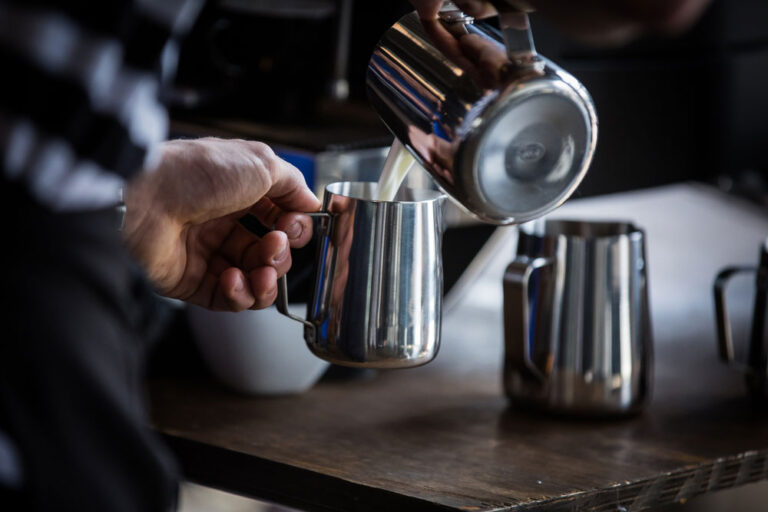
- Milk science: The protein chemistry of steaming, temperature control, microfoam vs cappuccino foam, latte art fundamentals
- Sensory calibration: Learning to identify extraction defects by taste — sour = under-extracted, bitter = over-extracted, how to describe what you’re tasting accurately
- Water chemistry: How mineral content affects extraction and why water matters more than most people realize
- Bar workflow: Speed, consistency, order sequencing, and how professional café environments operate
Any program that doesn’t cover all of the above isn’t teaching you coffee — it’s teaching you to make drinks from a recipe.
1. Counter Culture Coffee Training Centers — Best for Serious Home Brewers and Industry Professionals
Counter Culture Coffee (Durham, NC) operates dedicated training centers in multiple cities including New York, Chicago, Los Angeles, San Francisco, Atlanta, and Washington D.C. Their training arm — called the Counter Culture Coffee Training program — is one of the most respected coffee education programs in the country, used by specialty cafés to train their staff and available to the public.
What they offer: A tiered curriculum ranging from introductory “Tasting and Terminology” sessions (2 hours, ~$45) up through advanced espresso calibration, green coffee grading, and SCA (Specialty Coffee Association) certification prep courses. The SCA certification pathway at Counter Culture is one of the most credible routes to professional credentials in the US specialty coffee industry.
Standout feature: Counter Culture’s trainers are working coffee professionals who compete and consult — not just educators. The curriculum is updated regularly to reflect current industry practice. Their “Introduction to Espresso” and “Milk and Latte Art” courses are genuinely excellent entry points.
Cost: Individual courses range from $45–$200. Full SCA certification pathways (a series of modules leading to Barista Skills, Brewing, and Sensory Skills certifications) run $300–$800+ depending on the track.
Location: Multiple US cities — check counterculturecoffee.com for current schedules.
Best for: Specialty café employees, home brewers who want structured education, anyone pursuing SCA certification.
2. Intelligentsia Coffee Barista Training — Best for Aspiring Professional Baristas
Intelligentsia Coffee (Chicago-based, with locations in LA, NYC, and other cities) runs a professional barista training program through their cafés and training facilities that’s widely regarded as one of the most rigorous in the country. Their training culture is embedded in their café operations — Intelligentsia is known for having some of the most technically consistent espresso service of any US café chain.
What they offer: Intelligentsia’s public training courses are available at select locations and cover espresso fundamentals, milk texturing, pour-over brewing, and sensory skills. Their professional barista pathway — available to people considering working in specialty coffee — is more intensive and includes hands-on service training alongside the technical curriculum.
Standout feature: Intelligentsia trains to their own internal quality standards, which are among the most exacting in the US. Learning espresso calibration at Intelligentsia means learning to the same benchmark their professional baristas use across their café network. This carries real credibility in the specialty coffee industry.
Cost: Public courses typically $50–$150. Contact individual locations for current availability — their training schedule varies by location and season.
Location: Chicago, Los Angeles, New York, and select other cities.
Best for: People who want to work in specialty coffee, serious home brewers in cities where Intelligentsia operates.
3. Bellissimo Coffee Group — Best Comprehensive School for Café Owners
Bellissimo Coffee Group (Portland, Oregon) has been one of the US’s most established coffee training and consulting organizations since 1990. While they offer consumer-facing barista courses, their strongest programs are aimed at people opening or managing espresso businesses — cafés, coffee carts, coffee shops.
What they offer: Their flagship “Specialty Coffee Business Intensive” is a multi-day course covering everything from espresso and milk technique to café operations, menu development, equipment selection, and business planning. It’s essentially a crash course in running a coffee business, not just making coffee.
Standout feature: The business-focused curriculum is genuinely rare — most barista schools teach technique, not operations. Bellissimo’s training is particularly valuable for someone who wants to own a café but has little industry experience, or for someone transitioning from hobbyist to professional.
Cost: Multi-day intensive courses run $800–$2,500 depending on the program. Individual technique courses are more affordable at $100–$300.
Location: Portland, Oregon (primary). Some programs available online.
Best for: Aspiring café owners, managers, or anyone building a coffee business from scratch.
SCA Certification: The Industry Standard Worth Understanding
The Specialty Coffee Association (SCA) runs a globally recognized coffee certification system called the Coffee Skills Program (CSP). Certifications are available across five modules: Barista Skills, Brewing, Green Coffee, Sensory Skills, and Roasting. Each module has Foundation, Intermediate, and Professional levels.
SCA certifications are recognized by specialty cafés and coffee businesses worldwide. A Barista Skills Professional certification signals to employers that you’ve been rigorously evaluated to an international standard. For career baristas, it’s the most meaningful credential you can hold.
You can pursue SCA certification through authorized training providers — Counter Culture Coffee is one; there are authorized SCA trainers across the US. Check the SCA’s official website (sca.coffee) for the current authorized provider list in your region.
Barista Training Comparison
| School | Best For | Cost Range | SCA Certified? | Locations |
|---|---|---|---|---|
| Counter Culture | Home brewers, industry pros | $45–$800+ | Yes | 10+ US cities |
| Intelligentsia | Aspiring professionals | $50–$150 | Varies | Chicago, LA, NYC |
| Bellissimo | Café owners, operators | $100–$2,500 | Yes (select courses) | Portland (+ online) |
Frequently Asked Questions About Barista Training
Do you need formal training to become a barista?
No — most cafés hire without requiring prior certification and train on the job. However, barista school significantly accelerates your development and makes you a more attractive hire for specialty cafés that care about technical quality. The difference between a candidate who’s “willing to learn” and one who already understands extraction theory and has practiced milk texturing is obvious to a specialty café hiring manager. For career baristas, SCA certification is increasingly a meaningful differentiator.
How long does barista school take?
It varies widely by program. A foundational espresso + milk course at Counter Culture can be completed in a single day (6–8 hours). Full SCA certification across multiple modules takes weeks to months of dedicated study and practice. For most people interested in home brewing improvement, a 1–2 day intensive course is sufficient to dramatically upgrade their technique. Career baristas working toward professional-level SCA certification typically spend 3–6 months on the full curriculum.
Is barista school worth the money?
For career purposes, yes — clearly. For home brewers, it depends on your goals and how seriously you pursue coffee. A $45–$100 introductory course at Counter Culture will teach you more in one day than most people learn from years of self-directed trial and error, particularly around espresso calibration and milk texturing. If you’re spending significant money on equipment and beans already, a one-day course is a better investment than many equipment upgrades people make trying to compensate for technique gaps they don’t know they have.
Can I learn barista skills online?
Partially. The theoretical knowledge — extraction science, coffee chemistry, sensory terminology — transfers well online. YouTube channels like James Hoffmann’s and the SCA’s own educational content are genuinely excellent for the conceptual side. But physical technique — grinder calibration feel, steam wand positioning, tamping pressure, dialing in an espresso shot — requires hands-on practice with equipment and ideally feedback from someone watching you. Online education is a supplement to, not a replacement for, hands-on training.
Final Thoughts
If you’re serious about coffee — whether as a career or as a craft you want to genuinely master — spending a day or two in structured training is the fastest way to close the gap between where you are and where you want to be. The three programs above represent different points on the spectrum from hobbyist education to professional certification, and any of them will teach you more in a focused session than most people pick up over years of casual home brewing.
Start with Counter Culture’s introductory courses if you’re a home brewer. Go deeper with Bellissimo if you’re building a business. Intelligentsia if you’re in their markets and serious about a professional career.