The Complete Guide to Coffee Types: Every Roast, Origin, Brew Method and Drink Explained
This post may contain affiliate links. See our disclosure policy for details.
There are over 100 distinct coffee beverage types recognized globally, which is genuinely overwhelming when you’re staring at a café menu and all you wanted was something that wakes you up. But here’s what most coffee guides miss: all of those drinks come from exactly three base types of preparation. Understand those three, and every drink on every menu makes immediate sense.
This guide covers the complete landscape of coffee — from the plant it comes from, through how it’s processed and roasted, to every major beverage type and how they differ. This is the reference page for coffee. Bookmark it.
First: The Two Coffee Species That Matter
Of the 120+ species of coffee plants in the genus Coffea, two dominate global production:
Coffea arabica (Arabica)
Accounts for approximately 60–70% of global coffee production. Grows at high altitudes (900–2,000m+), requires specific climate conditions, and produces beans with complex flavor profiles — floral, fruity, sweet, with moderate to high acidity. Lower caffeine content than Robusta (~1.2–1.5% by weight). All specialty coffee is Arabica. This is what quality-focused roasters work with exclusively.
Coffea canephora (Robusta)
Accounts for approximately 30–40% of global production. More disease-resistant, grows at lower altitudes, higher yield per plant, and significantly cheaper to produce. Higher caffeine content (~2.5–3%) — nearly double Arabica. Flavor profile is harsher, more bitter, with earthy and rubbery notes. Used in espresso blends to add body and crema, and in most mass-market instant coffees. Vietnam is the world’s largest Robusta producer.
The quality difference between specialty Arabica and commodity Robusta is real and significant. “100% Arabica” on a bag is a meaningful signal. “Arabica blend” often means Arabica-majority with some Robusta — check the percentage if it matters to you.
Roast Levels: What the Numbers Mean for Your Cup
Roasting transforms green coffee beans into the brown beans you grind and brew. Temperature and time during roasting drive chemical reactions — primarily the Maillard reaction and caramelization — that create the hundreds of flavor compounds in coffee. The longer and hotter the roast, the darker the bean and the more roast-forward (less origin-forward) the flavor.
| Roast Level | Bean Color | Flavor Character | Caffeine (relative) | Best Used In |
|---|---|---|---|---|
| Light (Cinnamon, City) | Light brown, no oil | Floral, fruity, bright acid, tea-like | Highest | Pour over, Chemex |
| Medium (City+, Full City) | Medium brown, minimal oil | Caramel, chocolate, balanced | Medium | Drip, espresso, latte |
| Medium-Dark (Vienna, Full City+) | Dark brown, some surface oil | Dark chocolate, bittersweet, roasty | Medium-low | Espresso, cold brew |
| Dark (French, Italian) | Very dark, oily surface | Smoky, charred, low acidity | Lowest | French press, drip (bold) |
Common myth debunked: Dark roast coffee is NOT stronger in caffeine than light roast. Caffeine is largely stable through roasting. Dark roast beans are actually slightly lower in caffeine by weight (the beans expand and lose mass during roasting, concentrating the bean’s structure, but caffeine degrades very slightly at high temperatures). The “stronger” taste of dark roast is roast intensity, not caffeine strength.
The Three Brewing Methods — Everything Else Comes From These
1. Espresso (Pressure Extraction)
Hot water is forced through very finely ground, tightly packed coffee at approximately 9 bars of pressure, over 25–30 seconds. Produces a concentrated 30–40ml shot with a layer of crema. Espresso is the base of every café milk drink — lattes, cappuccinos, macchiatos, flat whites, cortados. It extracts more quickly than any other method, which is why the grind must be extremely fine and extraction time is measured in seconds, not minutes.
Espresso-based drinks, briefly:
- Espresso: The shot itself, 30–40ml, consumed straight
- Ristretto: Shorter extraction (15–20ml), more concentrated and sweeter — cuts before the bitter compounds extract
- Lungo: Extended extraction (60–80ml), more bitter, less concentrated
- Americano: Espresso + hot water, approximating drip coffee volume and strength
- Latte: Espresso + steamed milk (1:4 ratio), thin microfoam cap
- Cappuccino: Espresso + equal parts steamed milk + dense foam (1:1:1)
- Flat White: Espresso + steamed milk in a smaller volume (1:2–3), minimal foam
- Macchiato: Espresso + small dollop of foam (“stained” with milk)
- Cortado: Espresso + equal parts steamed milk, no foam
- Mocha: Espresso + chocolate + steamed milk
2. Immersion Brewing
Coffee grounds steep in hot water for a set period, then grounds are separated from the liquid. No filtering during brewing — extraction happens through time and temperature. Produces heavier body than filtered methods because oils pass through metal filters.
Methods: French press, AeroPress (hybrid), cupping (the professional tasting method), cold brew (cold water immersion over 12–24 hours), Turkish coffee (grounds remain in the cup).
3. Percolation / Drip Brewing
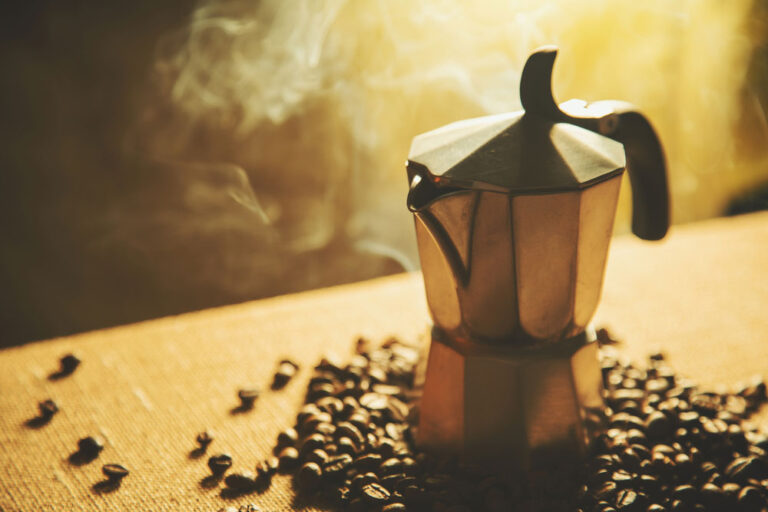
Hot water passes through a bed of ground coffee held in a filter. Gravity pulls the liquid through and extracts as it goes. Paper filters remove oils and fines, producing a clean, clear cup. Includes: drip coffee makers, pour over (V60, Chemex, Kalita Wave), and Moka pot (percolation under steam pressure).
Coffee by Origin: What Different Regions Actually Taste Like
This is the part of coffee that mirrors wine geography — the same species grown in different locations produces radically different flavors due to soil, altitude, climate, and local processing traditions.
- Ethiopia: The birthplace of coffee. Produces the most diverse flavor profiles of any origin — washed Ethiopians are floral, jasmine-like, bright; natural-processed Ethiopians are intensely fruity, wine-like, dark-berry forward. If you want to understand what light roast specialty coffee can taste like, start with an Ethiopian Yirgacheffe or Sidama.
- Kenya: High-altitude growing and the unique SL28/SL34 varietals produce coffees with an intense blackcurrant, tomato, and berry acidity that’s unlike anything else. Some of the most complex coffees in the world come from Kenyan AA lots.
- Colombia: Reliable, consistent, globally beloved. Clean, balanced, medium acidity, caramel and chocolate notes. Colombia is the most accessible entry point for specialty coffee because its profile rarely challenges or surprises.
- Brazil: The world’s largest coffee producer. Profile tends toward nuts, chocolate, low acidity, full body. Dominates espresso blends globally for its smooth, crema-friendly character. Less exciting as a single origin but essential as an espresso blend component.
- Sumatra (Indonesia): Wet-hulled processing creates the most distinctive profile in coffee — earthy, full body, low acidity, dark chocolate, sometimes described as “forest floor.” Divisive but beloved by dark roast fans. Exceptional in French press and cold brew.
- Guatemala: Volcanic soil and high altitude produce coffees with bright acidity, milk chocolate sweetness, and a spicy character from the volcanic mineral content. Antigua region is the most famous.
The Processing Methods That Change Everything
After harvest, how the coffee cherry is handled determines as much of the final flavor as the bean’s origin. Three main methods:
- Washed (wet): The fruit is removed from the bean before drying. Produces clean, bright, terroir-expressive coffees where origin flavors shine clearly. Most Ethiopian and Kenyan specialty coffees are washed.
- Natural (dry): The whole cherry dries with the fruit intact around the bean. The bean absorbs sugars and fermentation compounds from the fruit during drying, producing intensely fruity, wine-like, heavy-bodied coffees. Higher risk of defects if done poorly; exceptional when done well.
- Honey (pulped natural): Fruit skin removed but some or all of the mucilage (sticky fruit layer) left on during drying. A middle path — more sweetness and body than washed, cleaner than natural. Yellow, red, and black honey processing refer to how much mucilage remains.
Frequently Asked Questions About Coffee Types
What’s the difference between Arabica and Robusta in taste?
Arabica has a wider, more complex flavor range — floral, fruity, sweet, and acidic notes depending on origin and roast. Robusta tastes harsher, more bitter, with rubbery and earthy notes. Quality Arabica is significantly more pleasant to drink black. Robusta’s higher caffeine content and thick crema are the reasons it’s added to espresso blends — it adds caffeine and body in proportions that don’t destroy the overall flavor when blended carefully.
Does dark roast have more caffeine than light roast?
No — this is one of coffee’s most persistent myths. Caffeine is largely stable through roasting. If anything, dark roast contains very slightly less caffeine because caffeine degrades slightly at very high temperatures and the beans lose mass. Per-bean, caffeine content is virtually identical across roast levels. The “stronger” perception of dark roast comes from more intense, roasty flavors — not more caffeine.
What is specialty coffee?
Specialty coffee is coffee that scores 80 points or higher on the SCA’s 100-point cupping scale, evaluated by a certified Q Grader. At this quality level, the coffee is traceable to a specific origin, farm, and lot; has no significant defects; and has distinct, positive flavor characteristics. Specialty coffee represents approximately 15–20% of global coffee production. Everything sold by roasters like Intelligentsia, Counter Culture, Stumptown, Onyx, and similar brands is specialty grade. Most supermarket coffee is commodity grade.
What is single-origin coffee?
Single-origin coffee comes from one specific country, region, farm, or cooperative rather than being blended from multiple sources. It allows you to taste the specific terroir of that place. Single-origin coffees are generally sold by specialty roasters who have direct trade relationships with producers. The most prized are single-farm or single-lot coffees with full traceability to the exact field and harvest date.
What is cold brew and how is it different from iced coffee?
Cold brew is coffee brewed with cold or room-temperature water over 12–24 hours. The cold extraction produces a concentrate that’s naturally lower in acidity and bitterness than hot-brewed coffee, with a smooth, sweet character. Iced coffee is hot-brewed coffee poured over ice — faster to make but more acidic, and dilutes as the ice melts. Cold brew from a quality medium-dark roast produces genuinely excellent concentrate that needs no sugar or milk for most people.
Final Thoughts
Coffee is as deep as you want it to go. You can spend a lifetime exploring single-origin lots from every corner of the world, or you can simply identify which roast level and brewing method suits your mornings and drink that every day. Both are completely valid ways to engage with one of the most studied and nuanced food products on the planet.
What matters is that you understand enough of the fundamentals — species, roast, brewing method, origin — to make choices that actually match what you want in the cup rather than just picking something with nice packaging.