
How to Make Espresso: Easy Tips for Great Espresso Drinks

Making great espresso at home used to mean spending $800+ on a machine. That’s still an option — and a rewarding one — but it’s not the only path. Whether you own an actual espresso machine or you’re working with a moka pot and determination, this guide gives you everything you need to pull a shot (or its close equivalent) worth drinking every single morning.
What Espresso Actually Requires
True espresso is produced by forcing near-boiling water (90–96°C) through finely-ground coffee at 9 bars of atmospheric pressure. That pressure is what creates the emulsified oils and the crema — the hallmarks of a real shot. Most home “espresso” workarounds can’t replicate that exact pressure, but they can get remarkably close in flavor.
Before anything else, you need two things regardless of your brewing method: freshly ground coffee and the right grind size. Espresso grinds are very fine — finer than sand, almost like powdered sugar. Pre-ground espresso coffee goes stale within days. If you’re serious about quality, invest in a burr grinder. It will improve your espresso more than any other upgrade.
Method 1: Using a Home Espresso Machine
If you have a proper espresso machine — even an entry-level one — you already have the pressure you need. Here’s how to get the most out of it.
Grind Size and Dose
Start with 18–20 grams of coffee for a double shot. Your grind should feel like fine beach sand — it should clump slightly when pinched. If your shot pours in under 20 seconds, grind finer. Over 35 seconds, grind coarser.
Tamping
Apply 15–20kg of even pressure when tamping. Uneven tamping causes channeling — water finding the path of least resistance through the puck rather than passing through evenly. A level tamp matters more than the amount of force.
Extraction Time and Yield
A well-pulled double shot takes 25–35 seconds and yields 36–42ml. Start timing when the pump starts, not when liquid first appears. Adjust your grind until you consistently hit this range before experimenting with anything else.
Method 2: Using a Moka Pot
The moka pot produces something closer to strong stovetop coffee than true espresso — the pressure is about 1.5 bars rather than 9. But the result is rich, concentrated, and genuinely useful as an espresso substitute for milk-based drinks.
How to Use One Properly
- Fill the bottom chamber with hot (not boiling) water up to the safety valve. Starting with hot water prevents over-extraction from the bottom.
- Fill the filter basket with medium-fine coffee, level but not tamped.
- Assemble and place on low-to-medium heat.
- Remove from heat as soon as you hear the hissing/gurgling sound — this prevents the bitter final extraction.
Use medium-fine grind, not espresso-fine. Moka pots clog and build dangerous pressure with overly fine grinds.
Method 3: Using an AeroPress
The AeroPress can produce surprisingly concentrated coffee using its inverted method. It won’t match machine espresso, but it’s more portable and produces a cleaner cup than a moka pot.
Inverted AeroPress Method for Espresso-Style Coffee
- Invert the AeroPress (plunger inserted, chamber on top).
- Add 18g of fine-ground coffee.
- Pour 50ml of water at 85°C.
- Stir for 10 seconds, then cap with a wet filter.
- After 1 minute total, flip and press firmly over 30 seconds.
The result is dense and syrupy — not identical to espresso, but excellent as a base for cappuccinos or lattes when frothed milk is added.
Espresso Drinks You Can Make at Home
Once you have your espresso (or concentrate), these are the most commonly requested drinks:
Americano
Add 100–150ml of hot water to your double shot. Ratio is personal — start at 1:2 (espresso to water) and adjust. This is the most forgiving drink for beginners still dialing in extraction.
Cappuccino
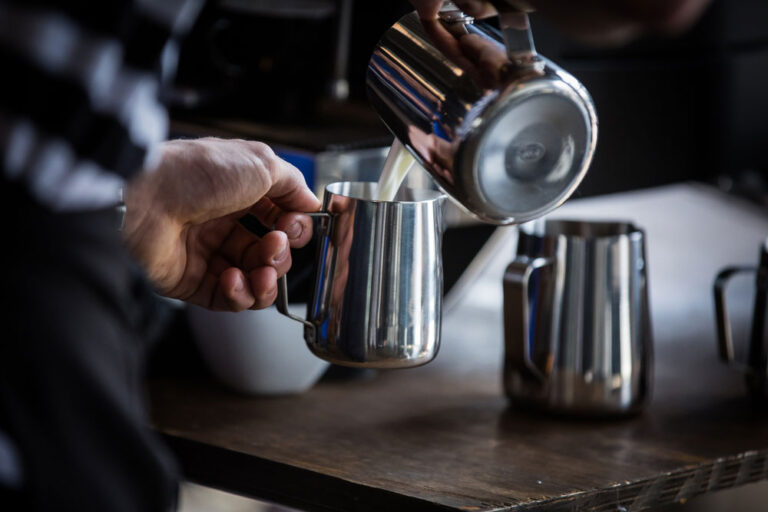
Equal thirds: espresso, steamed milk, milk foam. The foam should be dense and glossy, not dry. Milk should be around 60–65°C. Total volume is 150–180ml.
Latte
One or two shots of espresso, filled with steamed milk to about 240ml. Less foam than a cappuccino. The milk should be silky, not frothy.
Flat White
A double ristretto (shorter, more concentrated pull) with about 130ml of microfoamed milk. Served in a smaller cup than a latte. Higher coffee-to-milk ratio than anything else on this list.
Dialing In: The One Skill That Actually Matters
Most beginner espresso problems come down to not adjusting the grind. If your espresso tastes sour, grind finer. If it tastes bitter, grind coarser. This rule applies regardless of whether you’re using a machine, moka pot, or AeroPress.
Keep a simple log: grind setting, dose, yield, time, and a note on flavor. Two or three sessions of systematic adjustment will get you to a consistently good shot. After that, variables like water temperature and tamping pressure are worth tweaking.
Gear Worth Having
You don’t need much. A burr grinder is the most important purchase. After that, a basic kitchen scale (measuring to 0.1g) makes a genuine difference in consistency. Everything else is optional refinement.
If you’re curious about the full range of espresso-based drinks and their origins, this breakdown of espresso drinks around the world covers where each one came from and what distinguishes it. And if you want to understand the complete brewing spectrum, the French press guide makes a useful contrast — same goal of great coffee, completely different extraction method.





One Comment