How to Make a Latte at Home That Actually Tastes Like a Café Made It

This post may contain affiliate links. See our disclosure policy for details.
Most people who try to make lattes at home end up with one of two things: a weak, milky espresso that tastes like coffee-flavored water, or a screaming-hot mess of aerated milk floating on top of a shot that went cold while they were wrestling with the frother. Neither is a latte. Both are frustrating.
Here’s what’s actually happening when a barista makes a latte that tastes right, and exactly how to replicate it — whether you have a $600 espresso machine or a $40 Moka pot.
What a Latte Actually Is (Most People Get This Wrong)
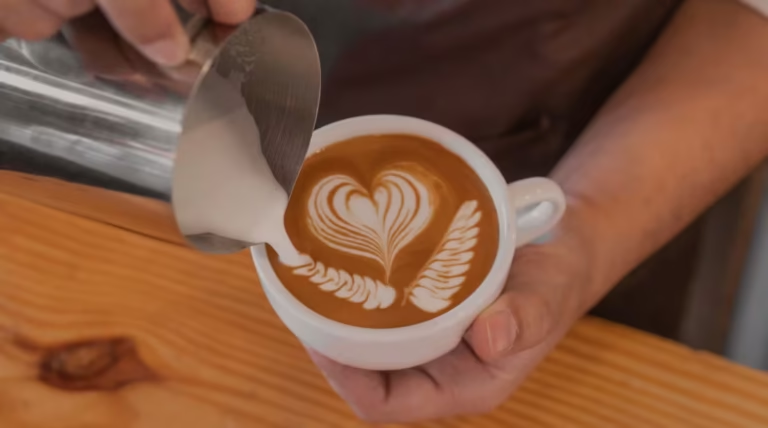
A latte is not “espresso with lots of milk.” The defining characteristic of a proper latte is the milk texture — silky, velvety microfoam that’s been steamed to between 140–150°F and incorporates seamlessly with the espresso rather than sitting on top of it.
The basic build of a latte:
- 1–2 shots espresso (30–60ml) — the base
- 150–200ml steamed whole milk — the body
- A thin cap of microfoam — 5–10mm maximum
The Espresso Base: Getting This Right Is Non-Negotiable
A latte is only as good as the espresso in it. Milk doesn’t hide bad espresso — it amplifies it.
What good espresso means for a latte:
- Extraction time: 25–30 seconds for a double shot (60ml)
- Healthy, reddish-brown crema on top
- Flavor balance: sweet, slightly acidic, with some bitterness — no one flavor dominating
Choose a medium or medium-dark roast with chocolate, caramel, or nutty notes. Light roasts don’t work well in lattes — the milk buries everything interesting about them.
Best beans for lattes in 2026:
- Intelligentsia Black Cat Classic Espresso (~$20/12oz) — chocolate, caramel, dried cherry.
- Stumptown Holler Mountain (~$17/12oz) — brown sugar, hazelnut, light citrus.
- Lavazza Super Crema (~$13/12oz) — hazelnut, honey, almond. Budget-friendly Italian blend.
Equipment: What You Actually Need
With an espresso machine and steam wand ($400+)
Minimum viable machine: Breville Bambino Plus ($500) — 3-second heat-up, automatic steam wand. Pair with Baratza Encore ($169) burr grinder. You’ll also need a 12oz stainless steel milk pitcher ($12–15) and thermometer ($12–15).
With a Moka pot ($25–40)
Makes coffee strong enough for a good latte. Use a fine grind, fill the basket fully without tamping, brew on medium-low heat. The Bialetti Moka Express 3-cup ($35) is the classic. Use a handheld electric frother ($10–15) for milk.
With an AeroPress ($40) + electric frother ($12)
Brew concentrated AeroPress at 1:6 ratio. Froth milk separately and combine. Total cost: under $55. Genuinely good results.
How to Steam Milk Properly
- Start cold. Cold milk gives more working time. Fill pitcher about 1/3 full.
- Purge the wand first. Blast steam for 1 second to clear condensate.
- Positioning: Wand tip just below surface, slightly off-center for a spinning vortex.
- Phase 1 — stretching (first 5–8 seconds): Keep tip at the surface. Listen for a gentle “chirp” sound as air incorporates. Stop when pitcher feels warm (~100°F / 38°C).
- Phase 2 — texturing (until done): Submerge tip slightly and let vortex run, breaking large bubbles into micro-bubbles. Stop at 140–150°F.
- Post-steam: Tap pitcher firmly 3–4 times. Swirl vigorously until milk looks glossy, like wet paint.
Latte Ratios for Every Size
| Cup Size | Espresso | Steamed Milk | Shots |
|---|---|---|---|
| Small (8oz) | 30ml | 180ml | 1 shot |
| Medium (12oz) | 60ml | 250ml | 2 shots |
| Large (16oz) | 60ml | 360ml | 2 shots |
| Extra strong (12oz) | 90ml | 220ml | 3 shots |
Flavored Lattes: The Right Way to Add Syrup
Add 1–2 pumps of flavored syrup to the espresso before adding milk. Torani ($8–10/bottle) and Monin ($10–14/bottle) are the standard brands. Starbucks uses 3–4 pumps in a 12oz drink — significantly sweeter than café standard.
Iced Latte: Same Idea, Different Build
- Fill glass with ice (full to the top)
- Pull espresso and pour over ice immediately
- Add cold milk at 1:4 espresso:milk ratio
- Add syrup if desired — stir well since it doesn’t dissolve easily in cold liquid
- Drink immediately
Frequently Asked Questions About Lattes
What’s the difference between a latte and a cappuccino?
A latte is 1 part espresso to 4 parts steamed milk with a thin microfoam layer. A cappuccino is equal thirds — espresso, steamed milk, and dense foam. The cappuccino has a stronger coffee flavor and thick, spoonable foam. A latte is creamier and milder.
What milk makes the best latte?
Whole milk for dairy — the fat content produces the richest microfoam. For non-dairy: Oatly Barista Edition and Minor Figures Oat Milk steam to microfoam nearly identical to dairy whole milk.
How much caffeine is in a latte?
A standard 12oz latte with 2 shots contains approximately 120–140mg of caffeine. The milk adds zero caffeine — it’s entirely in the espresso.
Why does my homemade latte taste sour?
Sour flavor almost always means under-extracted espresso. Fix: grind finer, extract longer, use water at 93–96°C. With a Moka pot, lower the heat and brew more slowly.
Can I make a latte without an espresso machine?
Yes. A Moka pot or Nespresso works well. AeroPress at high concentration also works. Any brewing method producing concentrated 30–60ml coffee will work — dilute methods like French press don’t have the intensity to hold up against milk.
Final Thoughts
A great latte at home is achievable at almost any budget — the variables are coffee concentration, milk temperature, and foam texture. Get those three things right and you’ve replicated 90% of what a café charges $6 for.
Start with fresh beans ground for espresso, whole milk steamed to 145°F, and a two-shot base. Everything else is refinement from there.