Mushroom Coffee vs Regular Coffee: An Honest, Research-Backed Comparison
This post may contain affiliate links. See our disclosure policy for details.
Mushroom coffee has gone from a fringe wellness product to a mainstream option you can find at Whole Foods, Target, and Amazon. Four Sigmatic — the brand most responsible for popularizing it in the West — was founded in 2012 and has since sold millions of units globally. But the marketing around it can be vague and hyperbolic, which makes it hard to know what’s actually going on with this stuff.
Having tried essentially every major mushroom coffee product on the market and done a deep dive into the research on functional mushrooms, here’s my honest take: some of the claims are well-supported, others are overblown, and the taste is quite good. Here’s the full comparison.
What Is Mushroom Coffee, Actually?
Mushroom coffee is not just ground mushrooms mixed with coffee beans. The mushrooms used are specific functional (medicinal) mushroom species — most commonly Lion’s Mane, Chaga, Reishi, Cordyceps, and Turkey Tail — that are extracted, dried, and blended with coffee in various ratios. The extraction process concentrates the bioactive compounds (primarily beta-glucans, hericenones, and other polysaccharides) while removing the water and fibrous material.
The result is typically a powder or instant coffee packet that contains both real coffee and mushroom extract, brewed like instant coffee. Some products also come in ground coffee form blended with mushroom powder, or as capsules to add to regular coffee.
Important nuance: The amount of mushroom extract in most commercial products is measured in milligrams — often 250–500mg per serving, which is a fraction of what clinical studies typically use (usually 1,000–3,000mg/day). This is a significant gap we’ll discuss later.
The Main Functional Mushrooms Used — What the Research Actually Says
Lion’s Mane (Hericium erinaceus) — The Cognitive One
Lion’s Mane is the most researched functional mushroom for cognitive function. It contains hericenones and erinacines, compounds that have been shown in laboratory studies to stimulate Nerve Growth Factor (NGF) production — a protein essential for the growth, maintenance, and survival of neurons.
The evidence: A 2009 double-blind, placebo-controlled study published in Phytotherapy Research found that adults aged 50–80 who consumed 3g of Lion’s Mane powder daily for 16 weeks showed significantly greater improvements on cognitive function tests compared to placebo. After stopping supplementation, scores declined again. A 2020 study found potential benefits for mild cognitive impairment.
The caveat: Most studies use 1,000–3,000mg/day of Lion’s Mane extract. A typical mushroom coffee serving contains 250–500mg of mixed mushroom extracts — often not even all Lion’s Mane. The dose-to-effect relationship means the quantities in mushroom coffee are likely sub-therapeutic for the studied cognitive benefits.
Chaga (Inonotus obliquus) — The Antioxidant One
Chaga is a parasitic fungus that grows on birch trees in cold climates (Russia, Scandinavia, Canada). It has one of the highest ORAC (oxygen radical absorbance capacity) scores of any natural food — extremely high antioxidant content. It contains betulinic acid, polyphenols, and melanin pigments with antioxidant properties.
The evidence: Most Chaga research is in vitro (cell studies) or animal studies, showing anti-inflammatory and antioxidant effects. Human clinical trials are limited. The antioxidant content is real and measurable, but translating that to specific health outcomes in humans requires more research.
Reishi (Ganoderma lucidum) — The Adaptogen/Sleep One
Reishi is probably the longest-used medicinal mushroom historically — it’s been used in Traditional Chinese Medicine for over 2,000 years as an “adaptogen” (a substance that helps the body respond to stress). Modern research suggests potential immune-modulating effects and possible benefits for sleep quality and anxiety.
The evidence: A 2012 study in Journal of Medicinal Food found that Reishi extract (1,800mg/day for 8 weeks) reduced fatigue and improved quality of life in breast cancer survivors. A 2019 meta-analysis found some evidence for immune function benefits. Sleep quality improvements have been noted in some studies at 600–1,800mg/day doses.
Cordyceps (Cordyceps militaris/sinensis) — The Energy One
Cordyceps is marketed primarily for athletic performance and energy. The proposed mechanism: increased adenosine triphosphate (ATP) production and improved oxygen utilization. It contains cordycepin, a compound with adenosine-like activity.
The evidence: A 2016 study in the Journal of Dietary Supplements found that 3 weeks of Cordyceps supplementation (1g/day CS-4 strain) improved VO2 max and time-to-exhaustion in older adults. A 2010 study found improvements in aerobic capacity in healthy adult males. The dose used was consistently around 1,000mg/day.
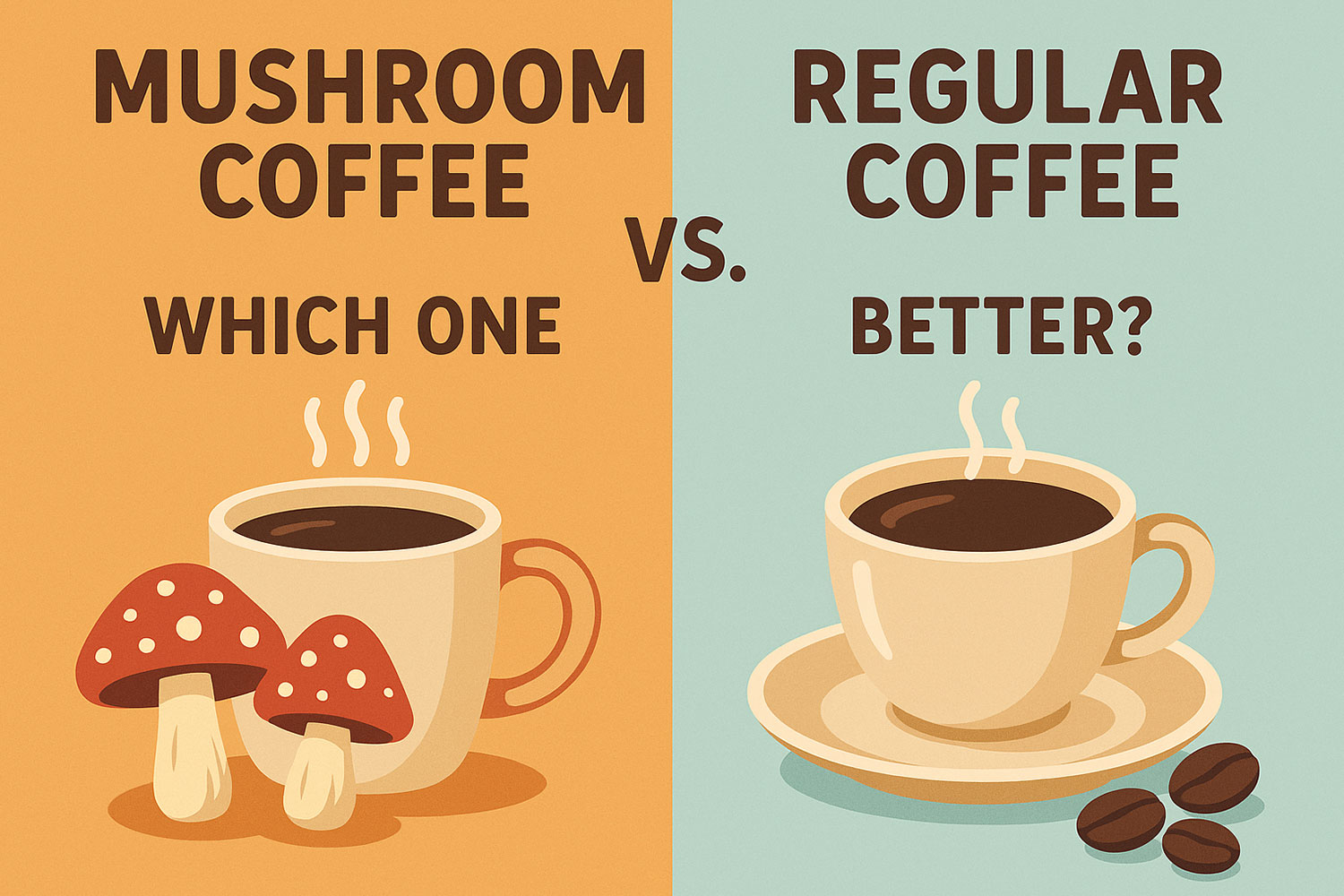
Regular Coffee vs Mushroom Coffee: The Honest Comparison
| Factor | Regular Coffee | Mushroom Coffee |
|---|---|---|
| Caffeine content | 80–120mg per cup (varies by brew) | Typically 50–80mg (less coffee in the blend) |
| Antioxidants | High (chlorogenic acids, polyphenols) | High (coffee + additional mushroom antioxidants) |
| Cognitive claims | Caffeine improves alertness, proven | Lion’s Mane claims promising but may be underdosed |
| Acidity | pH ~5 (moderately acidic) | Slightly less acidic (mushrooms raise pH slightly) |
| Taste | Pure coffee flavor | Earthy, slightly woody undertone |
| Cost per serving | $0.30–$1.50 (specialty) | $1.50–$3.50 per packet/serving |
| Research quality | Extremely extensive (thousands of studies) | Promising but early stage, limited human trials |
| Best for | Flavor experience, proven health benefits, value | Experimentation, lower acid, functional intent |
The Best Mushroom Coffee Products (Tested)
- Four Sigmatic Think Organic Coffee with Lion’s Mane & Chaga ($15–17 for 10 packets) — The brand that started it all. Smooth, earthy, genuinely decent coffee flavor. Contains 250mg Lion’s Mane extract per serving. Easy starting point. Available at Whole Foods, Target, Amazon.
- Ryze Mushroom Coffee ($30 for 30 servings — ~$1/serving) — Currently one of the most popular mushroom coffee brands. Contains 6 different mushrooms at 2,500mg total per serving — higher dosage than most competitors. Mild coffee flavor, works well with milk. Available at ryze.com and Amazon.
- MUD\WTR ($40 for 30 servings) — Technically a coffee alternative (not coffee-based) that contains Chaga, Lion’s Mane, Reishi, and Cordyceps along with cacao and spices. Very low caffeine (~35mg from black tea). Best for people trying to reduce coffee consumption while maintaining a morning ritual.
- Laird Superfood Mushroom Coffee ($25 for 12oz bag) — Ground coffee blended with mushroom powder, brewed in a regular coffee maker. For people who prefer the ritual of brewing rather than instant packets.
Who Should Consider Mushroom Coffee?
- People sensitive to caffeine: Mushroom coffee typically has less caffeine than standard coffee, and some proponents report a smoother, less jittery energy experience — possibly due to the adaptogenic effects of Reishi moderating the stress response.
- People with acid reflux: The slightly higher pH of mushroom coffee is easier on the stomach than regular coffee for some people.
- People curious about functional mushrooms: If you’re interested in Lion’s Mane for cognitive health, mushroom coffee is a low-friction way to incorporate it daily — even if the doses are lower than clinical studies use.
Frequently Asked Questions
Does mushroom coffee taste like mushrooms?
Not strongly. The mushroom extracts used are tasteless or mildly earthy — they don’t taste like the mushrooms you’d sauté in butter. Good mushroom coffee tastes primarily like coffee with a subtle earthiness or woodiness in the background. Four Sigmatic and Ryze are the least “mushroom-forward” tasting; MUD\WTR is more distinctly earthy since it’s not primarily coffee.
Is mushroom coffee safe?
For most healthy adults, yes — the functional mushrooms used have long safety records in traditional medicine and no significant adverse effects have been reported at typical supplementation doses. However, if you have autoimmune conditions (functional mushrooms can modulate immune function), are on blood-thinning medications (Reishi may have anticoagulant properties), or are pregnant/breastfeeding, consult your doctor before adding mushroom supplements or mushroom coffee to your diet.
Will mushroom coffee make me less anxious than regular coffee?
Some people report reduced anxiety and jitteriness with mushroom coffee compared to regular coffee. Two factors could explain this: (1) lower caffeine content overall, and (2) Reishi’s potential adaptogenic/anxiolytic properties. This is highly individual — some people notice a meaningful difference, others notice nothing. The subjective reports are consistent enough to be worth trying if caffeine anxiety is something you experience.
Can I make my own mushroom coffee?
Yes — buy Lion’s Mane, Reishi, and Chaga extracts separately as powders (Host Defense, Real Mushrooms, and Nootropics Depot are reputable brands that third-party test their products) and add them to your regular coffee. This allows you to dose more precisely, choose higher-quality mushroom extracts, and use whatever coffee you prefer. Real Mushrooms Lion’s Mane Extract ($30 for 60g) provides 2,000mg per serving and is third-party tested for beta-glucan content.
Final Verdict: Which Should You Drink?
If you love specialty coffee and the flavor experience is important to you — stick with quality regular coffee. The health benefits of regular coffee are extensively documented, it tastes better, and you have complete control over quality.
If you’re curious about functional mushrooms, experience caffeine sensitivity, or want to experiment — mushroom coffee is worth trying, particularly Ryze (for higher mushroom dosage) or Four Sigmatic (for coffee quality). Just go in with calibrated expectations: the cognitive and adaptogenic benefits may be real, but they likely require consistent use over weeks and higher doses than a single daily cup provides.
The honest middle ground: use quality regular coffee for most of your daily intake, and try a dedicated Lion’s Mane or Reishi supplement alongside it if cognitive or stress-related benefits are your goal. You’ll get better dosing control and can keep the coffee you love.