Luckin Coffee’s Viral Coconut Latte: What It Is and How to Make It at Home
This post may contain affiliate links. See our disclosure policy for details.
If you’ve spent any time on coffee TikTok or Instagram in the past year, you’ve seen it: that tall glass with layers of coffee and a creamy white top, topped with what appears to be whipped coconut cream, sometimes called the “Coconut Latte” from Luckin Coffee. It’s been shared millions of times. Café owners outside China are getting requests for it constantly. And people are trying to replicate it at home with varying success.
I tested this drink obsessively for three weeks. Here’s what it actually is, why it went viral, and how to make the authentic version — plus a home recipe that gets remarkably close to the real thing.
What Is Luckin Coffee?
For readers unfamiliar: Luckin Coffee (瑞幸咖啡) is China’s largest coffee chain by number of locations — it surpassed Starbucks China in store count in 2023 and has continued expanding rapidly. As of 2026, Luckin operates over 20,000 locations across China, making it one of the biggest coffee brands in the world by any measure.
Luckin’s business model is app-first and heavily discount-driven (many drinks are subsidized through the app to $2–3 USD). Their menu leans heavily into playful, experimental flavor combinations that appeal to Chinese consumer preferences — less emphasis on traditional espresso drinks, more focus on refreshing, sweet, and fruit-forward combinations.
The coconut latte (椰云拿铁, literally “coconut cloud latte”) launched in 2022 and became Luckin’s biggest single product hit, selling reportedly over 6 million units in its first week alone. It’s what put Luckin on the global coffee radar for people outside China.
What Makes the Coconut Latte Different?
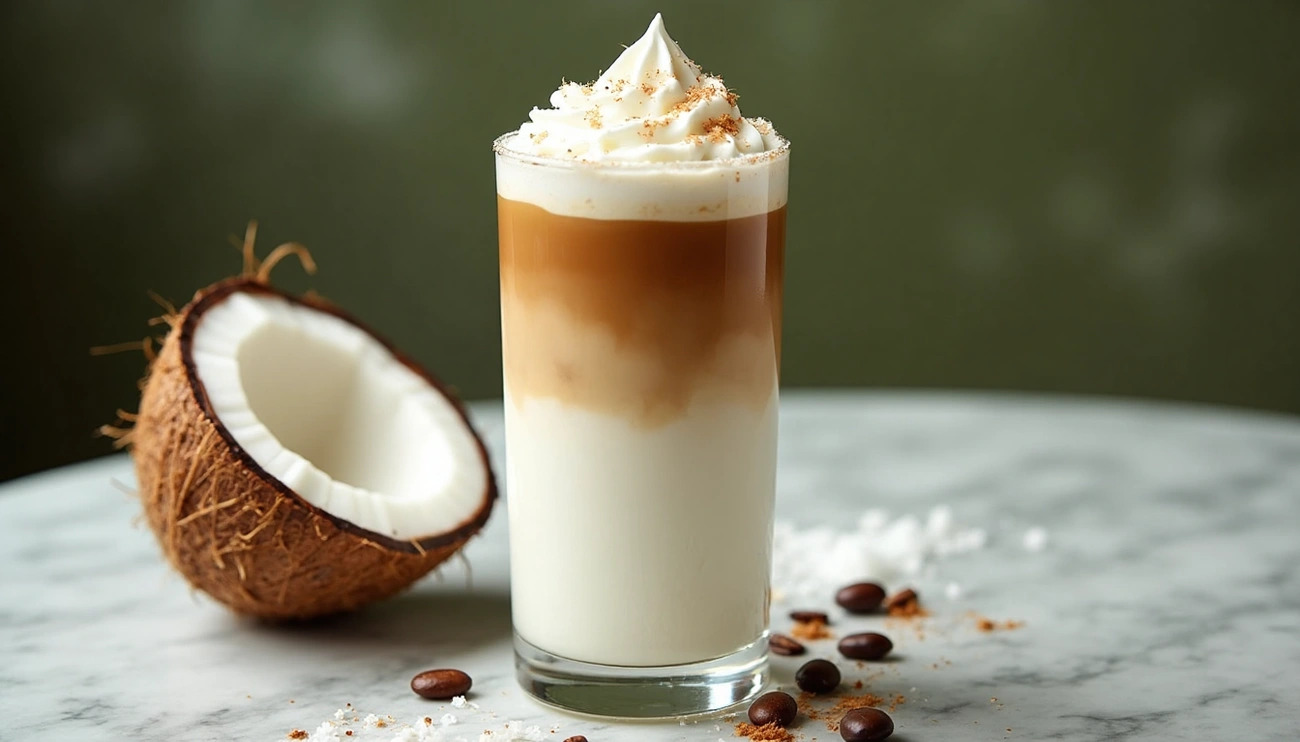
The Luckin Coconut Latte isn’t just espresso with coconut milk — that would be boring and available anywhere. What makes it distinctive is the texture and layering:
- The base: Cold espresso (1–2 shots) over ice, sometimes with a small amount of sweetener.
- The middle layer: Coconut milk or a coconut-milk blend poured over the espresso, creating a two-tone layered effect.
- The crown — this is the key: A thick, fluffy, foam made from whipped coconut cream (sometimes with added sweetener and a touch of salt), spooned or poured over the top. This “coconut cloud” foam is lighter and airier than a standard latte’s microfoam — it’s closer to a soft meringue or whipped cream texture. It doesn’t fully integrate with the drink; you sip through it.
The experience: you sip through the cold, lightly sweet coconut cream on top, then get the cool coffee-coconut mixture below. The temperature contrast and the texture contrast — light airy foam above, liquid below — is what makes it compelling.
Why It Went Viral
The visual component is obvious: the white cloud foam on top photographs beautifully, especially with the layered contrast of dark coffee below. But beyond aesthetics, there are three real reasons for its virality:
- The texture is genuinely novel: Most Western coffee drinkers had never experienced a cold coffee drink with a thick, cloud-like foam cap. It’s different from whipped coffee (Dalgona), different from standard cold foam, different from anything Starbucks sells.
- It works for non-dairy drinkers: 100% plant-based and dairy-free by nature, which makes it inherently accessible to a large and vocal segment of the market.
- It’s accessible to home replication: Unlike some café drinks that require specialized equipment, the coconut cloud latte can be approximated at home with a hand mixer and canned coconut cream. This drove massive “let me make this at home” content.
How to Make a Luckin-Style Coconut Latte at Home
After extensive testing, here’s the home recipe that best replicates the experience. The key insight: use full-fat coconut cream (not coconut milk, not light versions) chilled overnight for the whipped foam.
Ingredients (1 serving)
- For the coffee base:
- 2 shots espresso (or ½ cup very strong brewed coffee, chilled)
- Ice
- 1–2 tsp simple syrup or sugar (optional, to taste)
- For the coconut milk layer:
- 60ml (¼ cup) coconut milk — Aroy-D or Chaokoh brands work well
- For the coconut cloud foam (the important part):
- 1 can (400ml) full-fat coconut cream, refrigerated overnight — Thai Kitchen or Savoy Coconut Cream. The overnight chill is essential: it separates the thick cream from the liquid below.
- 1–2 tsp powdered sugar
- Pinch of fine salt (critical — the salt enhances the cream flavor and balances sweetness, just like salted whipped cream)
- ½ tsp vanilla extract (optional)
Method
- Make the coconut foam: Open the chilled coconut cream can without shaking it. Scoop out only the thick white cream that has solidified at the top — leave the clear coconut water below (save it for smoothies). Add the cream to a cold bowl with powdered sugar and salt. Whip with a hand mixer on medium-high for 2–3 minutes until it forms soft, fluffy peaks. It should look like lightly whipped cream — not fully stiff. Don’t over-whip or it becomes grainy.
- Build the drink: Fill a 12–16oz glass with ice. Pour espresso over the ice (add simple syrup if using). Pour coconut milk gently over the espresso — pour over the back of a spoon to create a cleaner layer separation.
- Add the cloud: Spoon or pour the whipped coconut cream generously over the top. Be generous — the foam cap should be at least 1–2 inches thick.
- Garnish (optional): A light dusting of toasted coconut flakes, a drizzle of condensed milk, or a few drops of vanilla extract over the foam.
- Serve immediately. Stir before drinking to mix layers, or sip through the foam without stirring for the full layered experience.
Variations Worth Trying
| Variation | What Changes | Result |
|---|---|---|
| Brown sugar coconut latte | Add brown sugar syrup to espresso base | Caramel-forward, deeper sweetness |
| Matcha coconut cloud | Replace espresso with matcha | Earthy, grassy, sweeter |
| Pandan coconut latte | Add pandan extract to coconut foam | Nutty, vanilla-like Southeast Asian flavor |
| Warm version | Serve espresso warm, foam at room temp | More traditional latte feel with coconut character |
Frequently Asked Questions
Can I buy the Luckin Coconut Latte outside China?
Luckin Coffee has limited international presence — as of 2026, they operate primarily in China with some locations in Singapore and a handful of other Asian markets. There are no Luckin locations in the US, UK, Australia, or most Western countries. The closest you can get outside Asia is making it at home with this recipe, or finding a café that serves a similar coconut cold foam coffee (Starbucks offers coconut cold foam as a customization in some markets).
What’s the difference between coconut cream and coconut milk?
Coconut cream is the thick, high-fat layer that separates from full-fat coconut milk when chilled. It has a much higher fat content (approximately 25–30% fat vs. 5–7% for coconut milk) and is what allows it to whip into foam. Coconut milk is thinner and won’t whip properly for this recipe. When buying for the foam, specifically look for “coconut cream” — brands like Thai Kitchen Coconut Cream, Savoy Coconut Cream, or Aroy-D Coconut Cream are reliable. Refrigerate the can overnight before using.
Why won’t my coconut cream whip?
Three common reasons: (1) The can wasn’t chilled long enough — it needs at least 8 hours in the fridge, ideally overnight. (2) You used light coconut milk or coconut milk instead of coconut cream — the fat content is too low to whip. (3) The can was shaken before opening — this remixes the cream and liquid. Always refrigerate cans without shaking, and open gently to scoop only the solid cream from the top.
What coffee roast works best for this drink?
A medium to medium-dark roast with chocolate and caramel notes complements the coconut’s sweetness without clashing. Avoid very light, fruity Ethiopian-style beans — the floral acidity competes oddly with coconut. Something like Stumptown Hair Bender, Intelligentsia Black Cat, or even a standard Colombian medium roast are all excellent here.
Final Thoughts
The Luckin Coconut Latte earned its viral status — it’s genuinely a well-designed drink that’s novel, photogenic, and accessible. The home version requires exactly one specialized technique (chilling and whipping coconut cream) and the result is impressively close to what people are flying to Singapore for.
The pinch of salt in the coconut cream is non-negotiable. Don’t skip it — it transforms the foam from flat and sweet to complex and addictive.
Made this at home? Share the result in the comments — I’d love to see how yours turned out.