The Ethiopian Coffee Ceremony: A Complete Guide to Jebena Buna Tradition
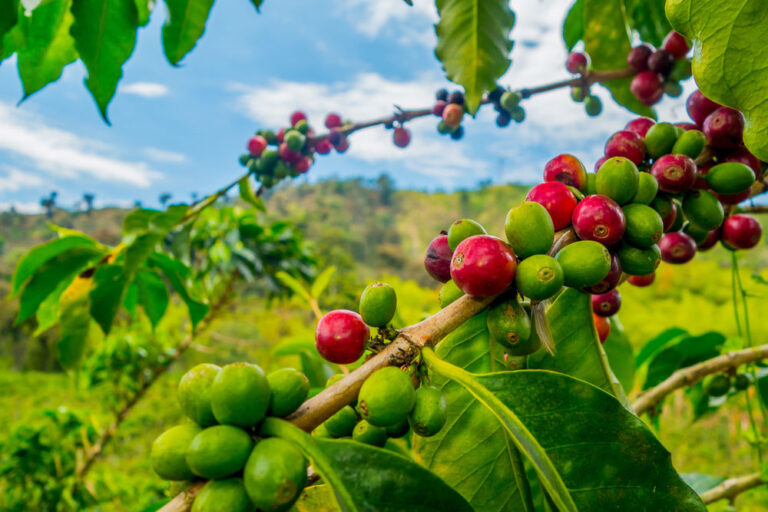
Coffee was born in Ethiopia. Not metaphorically — literally. The wild Arabica coffee plants that gave the world its favourite beverage grew naturally in the highland forests of southwestern Ethiopia, in a region called Kaffa, for centuries before anyone else knew coffee existed. That origin story gives Ethiopian coffee culture a depth and authenticity that no other country can claim, and nowhere is that culture more alive than in the Ethiopian coffee ceremony.
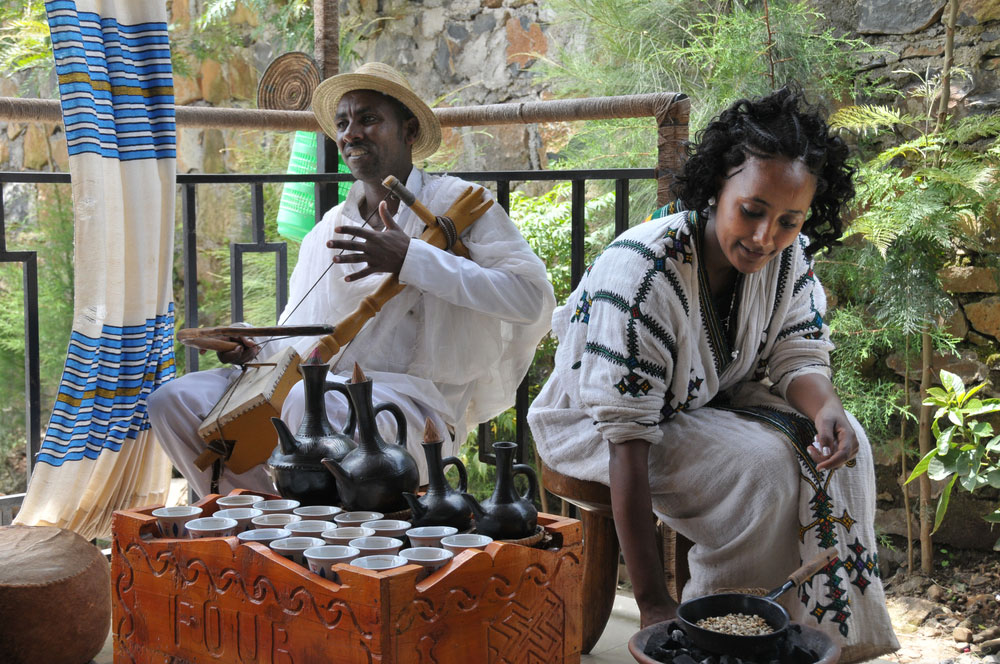
The coffee ceremony — called jebena buna in Amharic (jebena being the clay coffee pot, buna meaning coffee) — is one of the most elaborate and meaningful coffee rituals in the world. It’s not just a way of making and serving coffee; it’s an expression of hospitality, community, spirituality, and social identity that can take up to two or three hours from start to finish. An invitation to participate in a coffee ceremony is a mark of friendship and respect, and refusing one is considered impolite.
This guide covers the full ceremony — its origins, its steps, its meaning, and how to recreate elements of it at home if you want to experience Ethiopian coffee culture in your own kitchen.
The Origin of Coffee: Ethiopia’s Kaffa Region
The most widely cited origin story of coffee involves a 9th-century Ethiopian goat herder named Kaldi who noticed his goats became unusually energetic after eating red berries from certain forest shrubs. He brought the berries to a local monastery, where monks made a drink from them and discovered it kept them alert during long evening prayers. Whether or not Kaldi is historical fact, the core of the story is accurate: wild Arabica coffee (Coffea arabica) is indigenous to the highland forests of southwestern Ethiopia, and the Kaffa region — whose name many etymologists believe gave us the word “coffee” itself — remains one of the last places where wild coffee plants grow naturally in forest ecosystems.
In 2010, UNESCO recognized the Kaffa Biosphere Reserve in Ethiopia for its ecological significance and its wild Arabica coffee forests. Ethiopia is also the world’s fifth-largest coffee producer, and coffee accounts for a significant portion of the country’s export revenue — making the plant not just culturally important but economically foundational to the nation.
Ethiopian coffees — particularly those from regions like Yirgacheffe, Sidamo, Harrar, and Kaffa itself — are among the most prized in the specialty coffee world, known for their exceptional floral, fruity, and complex flavor profiles that reflect the wild genetic diversity of Arabica coffee at its source.
What Is the Coffee Ceremony?
The Ethiopian coffee ceremony (jebena buna or buna tetu — literally “drink coffee”) is a formalized social ritual that transforms the act of making and sharing coffee into a communal event with deep cultural significance. It is typically performed by the woman of the household, though men may also conduct it in some contexts. Performing the ceremony well is considered a skill and a mark of good character.
The ceremony is performed on a variety of occasions: welcoming guests into the home, celebrating holidays and life events, conducting business discussions, or simply as a daily communal ritual in some households. In rural Ethiopia, the ceremony happens multiple times a day. In urban Ethiopia and among the diaspora, it remains a weekend and celebration ritual.
The ceremony is not just about the coffee. It encompasses the full sensory environment: the smell of incense, the fresh grass on the floor, the visual spectacle of roasting and grinding, the sounds of the grinding and pouring. Together, they create an experience that is intentionally immersive and socially connective.
The Equipment: What You Need for Jebena Buna
Jebena — The clay coffee pot is the centrepiece of the ceremony. Traditional jebenas have a round bottom, a narrow neck, a long spout, and a handle. They’re made from fired clay and have a small piece of horsehair or straw inserted at the base of the spout that acts as a natural filter, holding back the coffee grounds. Jebenas are available online and in Ethiopian grocery stores internationally.
Rekebot — A traditional wicker tray or stand that holds the ceremony equipment, including the small cups.
Cini (also spelled sini) — Small, handle-less porcelain cups without a handle, similar to Chinese tea cups, used to serve the coffee. They’re small — about 60–80ml — because the coffee is served strong.
Menkeshkesh and Mukecha — A traditional wooden mortar (mukecha) and pestle (menkeshkesh) for grinding the roasted beans. In modern practice, a hand grinder or electric grinder is often used.
Incense (itan) — Frankincense or other aromatic incense is burned throughout the ceremony. The scent is considered purifying and creates the ceremonial atmosphere.
Fresh grass and flowers — The area where the ceremony is conducted is traditionally decorated with fresh-cut grass spread on the floor and small yellow flowers, representing life and fertility.
The Coffee Ceremony Step by Step
Setting the Stage
The ceremony begins with preparation of the space. Fresh grass is spread on the floor where the host will sit, sometimes decorated with yellow flowers. Incense is lit and placed nearby — the fragrance of frankincense will fill the room throughout the ceremony. The rekebot tray is arranged with the jebena, the cini cups, and a container of green (unroasted) coffee beans.
The Roasting: Qalitcha
Green coffee beans are placed in a flat iron pan (menkeshkesh) and roasted directly over a charcoal burner or open flame. The host stirs and shakes the beans continuously for 10–15 minutes as they transform from green to yellow to brown to nearly black. The roasting is done in the room with the guests — the smell of freshly roasting coffee fills the space, which is part of the sensory experience.
When the beans are ready, the host carries the pan around the room so each guest can wave the aromatic smoke toward themselves — inhaling the fresh roast scent. This is one of the most distinctive and moving moments of the ceremony: a physical act of sharing the essence of the coffee before it’s even been brewed.
The Grinding: Kutecha
The freshly roasted beans are poured into the mukecha mortar and ground with the menkeshkesh pestle — a rhythmic, physical process that produces a coarse-to-medium grind. In many modern Ethiopian homes, a hand or electric grinder is used at this stage, but the traditional mortar and pestle remains common in rural areas. The freshly ground coffee has an intensity of aroma — uncontaminated by time or packaging — that pre-ground coffee simply cannot match.
Brewing in the Jebena
Cold water is added to the jebena along with the ground coffee. The jebena is placed over the charcoal burner and brought slowly to a boil. Ethiopian coffee brewing is unfiltered — similar in principle to Turkish coffee — and the jebena’s horsehair filter at the spout prevents grounds from entering the cups when pouring. The coffee brews for several minutes, producing a dark, rich, full-bodied liquid.
The Three Rounds: Abol, Tona, and Baraka
Here is where the Ethiopian coffee ceremony differs fundamentally from any other coffee tradition: the coffee is served in three successive rounds, and each round has its own name and meaning.
Abol (the first round) — The first pour is the strongest and most concentrated. The host pours small cups for all guests, beginning with the eldest or most honored person. It is considered rude to leave before Abol.
Tona (the second round) — More water is added to the jebena and the coffee is brewed again from the same grounds. The second serving is slightly lighter than the first but still substantial. Between rounds, conversation continues — this is a social ceremony, and the gaps between rounds are not dead time but active community time.
Baraka (the third round) — The word baraka means blessing in Amharic (and Arabic). The third and final round is the most diluted but carries the greatest symbolic weight. Ethiopians believe that completing all three rounds transforms your spirit — the ceremony is not considered complete without it. Leaving before Baraka is considered impolite.
Each cup is served with sugar — sometimes with salt in some traditional communities, particularly in the Tigray region, which is a flavour combination that surprises most non-Ethiopian guests but is deeply traditional. Plain popcorn (kolo or regular popcorn) is the traditional snack served alongside the coffee.
The Role of Women in the Ceremony
The coffee ceremony is traditionally conducted by women, and a woman who performs it gracefully and skillfully is held in high regard. The ceremony is one of the primary expressions of hospitality and social skill in traditional Ethiopian society — comparable to the role that elaborate cooking plays in many cultures.
Young women are taught the ceremony by their mothers and grandmothers. In the Ethiopian diaspora, the ceremony plays an important role in cultural continuity — second and third-generation Ethiopians often cite the coffee ceremony as one of the most vivid and meaningful connections to their heritage, even when language and other cultural markers have faded.
Ethiopian Coffee Varieties: What to Brew
If you want to recreate jebena buna at home, the coffee you use matters enormously. Ethiopian coffees are unlike coffees from other regions because of the wild genetic diversity of the Arabica plants and the traditional growing methods (shade-grown, often naturally processed).
Yirgacheffe — Probably the most internationally famous Ethiopian coffee. Grown at high altitude in the Gedeo Zone, Yirgacheffe coffees are known for intense floral and citrus notes — jasmine, bergamot, lemon — with a clean, tea-like body. It’s unusual and beautiful. Yirgacheffe has protected geographical indication status, meaning only coffees grown in that specific region can use the name.
Sidamo — Coffees from the Sidamo region tend to be slightly fuller-bodied than Yirgacheffe, with stone fruit, berry, and chocolate notes. A versatile Ethiopian coffee that works across multiple brewing methods.
Harrar — From eastern Ethiopia near the city of Harar, these coffees are traditionally dry-processed (sun-dried in the fruit) and have a distinctive, bold, winey character with blueberry and dark fruit notes. Harrar is one of the oldest continuously cultivated coffees in the world.
Kaffa/Jimma — Coffees from the original Kaffa region, where wild coffee still grows. These tend to be earthier and more rustic than Yirgacheffe — closer to what the ceremonial coffee of the original tradition tastes like.
How to Recreate the Ethiopian Coffee Ceremony at Home
You don’t need to replicate every element perfectly to experience the spirit of jebena buna at home. Here’s a practical approach:
Purchase green (unroasted) Ethiopian coffee beans if you want the full experience — home roasting in a pan over medium heat with constant stirring takes about 12–15 minutes and produces a genuinely extraordinary result in terms of freshness. If you can’t source green beans, buy the freshest whole-bean Ethiopian coffee you can find.
A jebena is available online for around $20–40 and is the single biggest contributor to authenticity. Alternatively, a small saucepan works as a substitute — the clay of the jebena does add a subtle mineral quality to the coffee, but the technique works with any heat-safe vessel.
Light incense before you begin. Brew slowly, without rushing. Serve in small cups. Share it with someone. The ceremony is fundamentally about community — brewing coffee alone in your kitchen while rushing to work is not jebena buna, no matter what equipment you use.
Serve with popcorn, as Ethiopians do. Have at least two cups. Talk during the gaps.
Ethiopian Coffee Around the World
Ethiopian coffee is now one of the most sought-after origins in specialty coffee globally. Brands like Stumptown Coffee, Blue Bottle Coffee, and Intelligentsia regularly feature Ethiopian single origins among their flagship offerings, and Ethiopian coffees consistently score among the highest in Cup of Excellence competitions.
In cities with significant Ethiopian diaspora communities — Washington D.C., Minneapolis, London, Melbourne, Sydney — you’ll find Ethiopian restaurants and cafés that conduct authentic coffee ceremonies for guests. Seeking one out is one of the best coffee experiences available anywhere in the world.
Frequently Asked Questions
How long does the Ethiopian coffee ceremony take?
A full traditional ceremony takes 1–3 hours, accounting for the time to roast, grind, brew, and serve all three rounds with the social time in between. In practice, many Ethiopian households conduct a shorter version on weekdays and the full ceremony on weekends and for special occasions.
Is Ethiopian coffee always strong?
Ceremonial Ethiopian coffee is served strong and black, with sugar. The small serving size (60–80ml in a cini cup) means the total volume is modest even though the concentration is high. The caffeine content per ceremony — three rounds of small cups — is roughly equivalent to two standard cups of drip coffee.
What does Ethiopian coffee taste like?
It depends significantly on the region and processing method. Ethiopian coffees as a category are known for being fruity, floral, and complex — more so than coffees from most other origins. The ceremonial preparation (traditionally a medium to dark roast, brewed unfiltered) produces a full-bodied, aromatic cup quite different from the same beans made as a light-roast pour-over.
Can I participate in a coffee ceremony as a visitor?
Yes — being invited to a coffee ceremony in Ethiopia is an honour, not a tourist performance. Many Ethiopian restaurants internationally offer ceremonial coffee service, and some specialty coffee shops in cities with Ethiopian communities conduct authentic ceremonies. Participating respectfully (staying for all three rounds, accepting the popcorn, avoiding rushing) is appreciated.
How is Ethiopian coffee different from regular coffee?
Ethiopian Arabica coffees are genetically diverse wild-origin plants, which gives them a flavor complexity not found in commodity coffee or even most other specialty origins. The difference is most noticeable in a Yirgacheffe natural process coffee compared to, say, a Brazilian or Colombian commodity blend — the Ethiopian version will have fruit, flower, and wine-like notes that feel almost alien if you’re used to standard coffee.
Final Thoughts
The Ethiopian coffee ceremony is the most human coffee experience I know of. It takes something we’ve turned into a fast, solitary, caffeination routine and insists that it be slow, communal, and intentional. Three rounds. An hour at minimum. Incense and fresh grass and popcorn and conversation. The spirit transforms, as Ethiopians say about completing Baraka.
Whether or not you can recreate the full ceremony at home, understanding it changes how you think about coffee — not as a commodity or a caffeine delivery system, but as a plant with a history and a culture and a ceremony that has existed for centuries before any of us started ordering triple-shot lattes in paper cups.
For more on the world of extraordinary coffee brewing traditions, explore our guide to Turkish coffee — another unfiltered brewing tradition with its own deep cultural history — or discover the moka pot, an Italian stovetop method that brings its own form of coffee ceremony to morning routines around the world.